


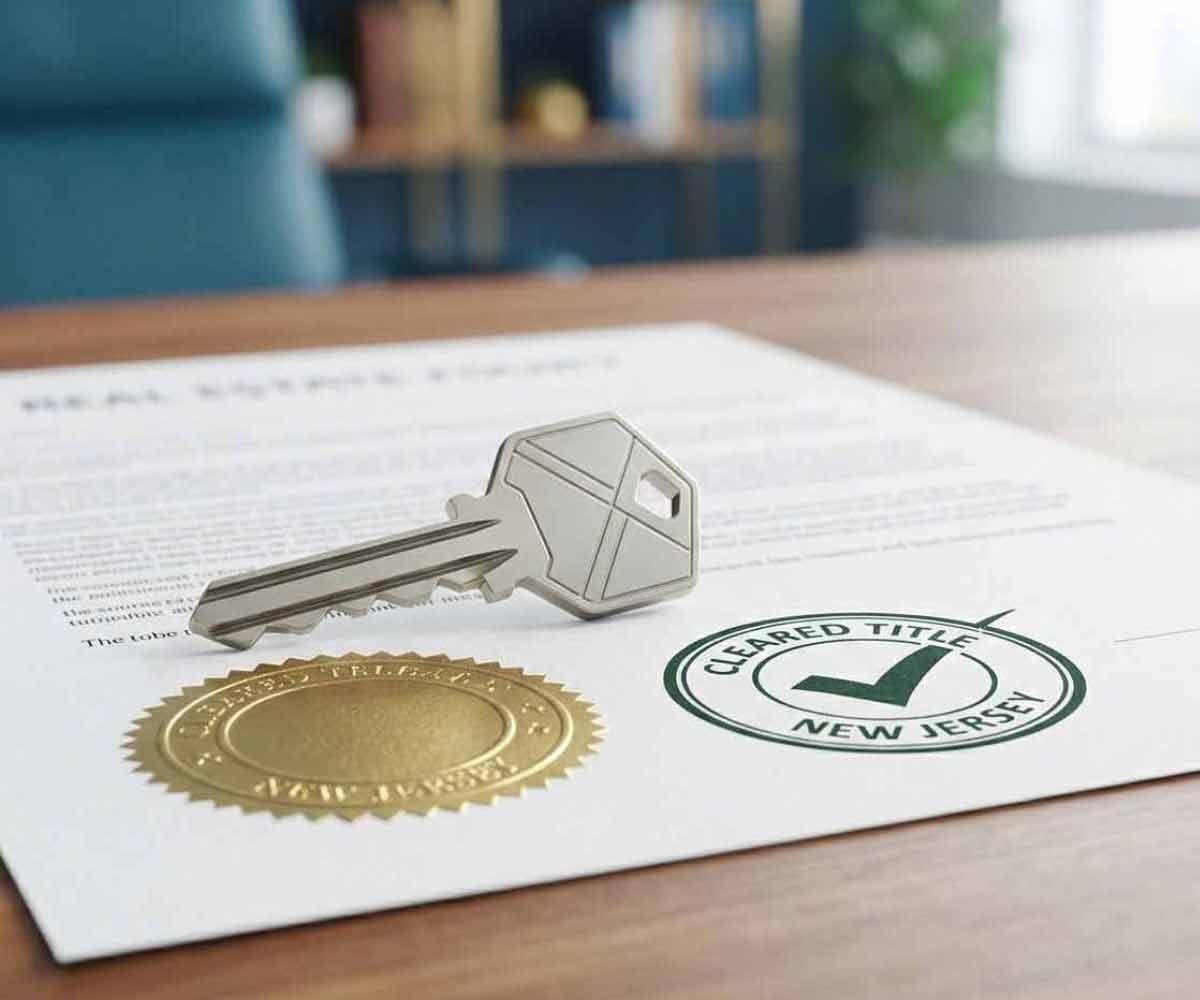
A clean closing rests on one quiet assumption: the seller truly owns what they are selling. Title defects in New Jersey challenge that assumption, and they tend to surface at the worst moment, often days before closing.
This guide explains what title defects in New Jersey are, which types you are most likely to meet, what risks each carries, and how to clear them. It is written for attorneys, lenders, home buyers, and commercial clients who want one reliable reference.
Each section stands on its own, so you can jump to the issue in front of you. Where we have a dedicated guide on a subject, we point you to it as further reading. This article is informational and is not legal advice.
What Are Title Defects in New Jersey?
A title defect is any flaw in a property’s ownership record. It raises doubt about who owns the property, what claims exist against it, or whether the owner can transfer it freely. Title defects in New Jersey range from a forgotten mortgage to a missing signature on a deed written decades ago.
Ownership records in New Jersey are kept at the county level, and each county maintains its own indexes. A title search reads that record backward through prior owners. Anything that breaks the chain or burdens it becomes a defect to cure or an exception to insure.
Defect, Encumbrance and Cloud: How They Differ
These terms overlap, but they are not identical.
- Defect: any flaw that affects ownership or the ability to transfer.
- Encumbrance: a claim attached to the property, such as a mortgage, lien, or easement. A buyer may knowingly accept some of these.
- Cloud: a claim or irregularity that looks valid on its face but may not be.
How Defects Surface in a New Jersey Transaction
A title agency orders the search and issues a commitment. The attorney and the lender then review it, and problems appear as requirements to satisfy or exceptions to resolve. Surveys, municipal searches, and payoff letters add further layers.
Early review matters because most cures need other parties to act. A lender must record a discharge, a seller must sign an affidavit, or a clerk must accept a corrected filing.
Clouded Title in New Jersey
A clouded title carries an unresolved claim that could challenge the owner’s rights. Typical sources include an old lien nobody cleared, a disputed inheritance, a deed with unclear wording, or a claim by someone who never signed away their interest.
The risk is practical. Lenders will not fund and buyers hesitate while a cloud remains, which can stall a sale or force a price cut. Some clouds disappear with a simple release or affidavit. Others need a court to declare who holds valid rights.
We cover this in more detail in a dedicated guide on what a clouded title in New Jersey is and how it can be cleared.
Unreleased Mortgages and Liens
This is among the most common problems in title work. A homeowner pays off a loan, but the lender never records a discharge, so the old mortgage still appears against the property.
New Jersey law requires a mortgagee to cancel or discharge a paid mortgage within 30 days of payment. If the lender does not act, a written notice triggers a 15 business day response window, and the owner may bring suit to cancel the mortgage of record. A home equity line of credit also needs to be paid off and formally closed, because an open line can keep its priority.
Many closings are delayed because a prior lender is slow to respond. Our guide on how unreleased mortgages can create problems during a New Jersey closing walks through this scenario in detail.
Judgments, Tax Liens and Municipal Charges
A docketed judgment against an owner can attach to real estate that owner holds. Unpaid property taxes, municipal water and sewer charges, and tax sale certificates add to the list.
Property taxes hold a priority position over most other encumbrances, regardless of when those liens arose. Condominium and homeowner association assessments can also carry lien rights.
Most of these are cured at closing. The closing agent obtains payoff figures, pays the creditor from the seller’s proceeds, and records or obtains the release. Judgments that belong to someone with a similar name need a separate process, covered below.
Old Deeds, Missing Signatures and Recording Errors
Older records often hide the quietest defects. A deed may lack a required signature, carry a defective acknowledgment, describe the land incorrectly, or never have been recorded at all.
Missing parties are a frequent trigger. Everyone who holds an interest must sign documents that affect title, and in some situations a non-titled spouse also needs to join the transfer. A deed from someone who had already died, or from an entity that no longer existed, can also break the chain.
Fixes include a corrective deed, a re-recorded instrument, an affidavit, or a court order when a party cannot be reached. For more examples, see our guide on old deeds, missing signatures and recording errors: title problems to watch for.
Name Variations and Identity Issues
Names look simple until a title searcher has to match them across fifty years of filings. Nicknames, middle initials, maiden and married names, suffixes like Jr. and Sr., and plain typos can all cause a search to miss a lien or flag the wrong one.
The risk runs both ways. A real lien can slip through unnoticed, or a judgment against a stranger with a similar name can falsely appear against your seller. Both create delays.
Standard cures include affidavits of identity, same-name searches, and corrective documents that use “also known as” language. Our guide on how name variations can complicate a New Jersey title search explains the process step by step.
Gaps in the Chain of Title, Estates and Probate
A chain of title is the unbroken sequence of owners from the earliest record to today. A gap appears when a transfer is missing, such as an heir who sold without the estate being administered.
Estates cause many of these gaps. Heirs may sell before probate, unknown heirs may surface, or a will may never have been filed. Each leaves the buyer relying on a transfer that nobody with authority approved.
Cures include opening or completing the estate, obtaining proper letters, and recording heirship affidavits. When a gap cannot be closed any other way, a quiet title action may follow.
Boundary, Survey, Easement and Tidelands Issues
Not every defect lives in the deed books. Surveys can reveal encroachments, fences on the wrong line, or driveways that cross a neighbor’s land. Recorded and unrecorded easements can limit how the owner uses the property.
New Jersey recognizes adverse possession, which generally requires 30 years of qualifying use, so a long-standing neighbor’s claim is worth taking seriously. Properties near water can also face tidelands claims, in which the State asserts rights in lands that were once tidal. These are often resolved through a riparian grant or license from the State.
Remedies include boundary agreements, recorded easements, updated surveys, riparian documentation, and court action when parties disagree.
Fraud, Forgery and Undue Influence
A forged deed, a fake release, or a seller impersonating the true owner can all place a fraudulent entry in the record. Vacant land and properties owned by older or absent owners attract the most attempts.
The damage is severe because everyone downstream relies on a document that was never valid. Cures usually involve litigation, a quiet title action, and an insurance claim where coverage exists. Careful identity verification, notary review, and escrow safeguards help prevent these issues.
Title Defects in New Jersey at a Glance
| Defect type | Common cause | Main risk | Typical cure | Usually cured before closing? |
| Clouded title | Old claim or unclear deed language | Lender refuses to fund | Release, affidavit or court ruling | Sometimes |
| Unreleased mortgage | Lender never recorded discharge | Prior lien still appears | Discharge, notice or suit to cancel | Usually |
| Judgments and tax liens | Unpaid debts or taxes | Lien attaches to sale | Payoff from proceeds, release | Usually |
| Deed and recording errors | Missing signature, bad acknowledgment | Invalid transfer | Corrective deed, re-recording | Often |
| Name variations | Nicknames, typos, name changes | Missed or false hits | Identity affidavit, same-name search | Usually |
| Chain of title gap | Unprobated estate, missing deed | Unknown heirs may claim | Probate, heirship affidavit, court action | Sometimes |
| Boundary and easement | Survey conflicts, adverse possession | Loss of land or use | Survey, agreement, easement, court | Sometimes |
| Tidelands | State claim on tidal lands | Cloud on waterfront parcels | Riparian grant or license | Sometimes |
| Fraud or forgery | Impersonation, fake documents | Invalid ownership | Litigation, quiet title, claim | Rarely |
The Risks of Ignoring Title Defects
The consequences differ by role, but they share one theme: unresolved problems become more expensive over time.
- Home buyers can lose their down payment timeline, face closing delays, or inherit a lien they did not know about.
- Lenders risk funding a loan that sits behind a senior lien, which weakens the collateral.
- Attorneys face contract deadlines, client frustration, and potential exposure if a defect is missed.
- Commercial clients can lose financing, stall development schedules, or find a parcel unmarketable.
Here is a simple, hypothetical example. A seller paid off a mortgage years ago, but no discharge was recorded. The lender has since merged with another institution, and tracking down the right department takes three weeks. The closing slips, the buyer’s rate lock expires, and everyone pays for a problem that a simple check could have flagged early.
How to Clear Title Defects in New Jersey
Most defects follow a similar path to resolution.
- Identify the defect. Review the full title commitment, recorded documents, survey, and municipal searches.
- Classify it. Decide whether it is a lien to pay, a document to correct, an identity issue, or a claim that needs a court.
- Choose the cure. Common options include payoff and release, corrective deed, affidavit, probate, easement or boundary agreement, and court action.
- Document and record. A cure only counts once the proper paperwork is signed, acknowledged, and recorded.
- Confirm insurability. Ask the title agency to confirm the issue has been removed or insured over.
When voluntary fixes fail, a quiet title action under New Jersey law asks the court to declare who holds valid rights and to remove competing claims. It is slower and costlier than other options, so it is typically a last resort.
What Happens When a Title Issue Is Found Before Closing?
Finding a defect before closing is the best case. The attorneys, lender, and title agency can work on it while the contract is still open.
Typically, the title agency lists the problem as a requirement. The seller’s attorney then works to clear it, and parties may agree to extend the closing date, hold funds in escrow, or adjust terms. If the defect cannot be cured, the contract’s marketable-title provisions guide what the buyer can do next.
Our guide on what happens when a title issue is found before closing covers timelines, negotiation options, and what each party should expect.
Title Insurance and Title Defects in New Jersey
Title insurance is a contract of indemnity, not a guarantee of ownership. An owner’s policy generally protects against covered title risks that existed before the policy date, such as undiscovered liens, forged documents, or recording errors.
It does not cover everything. Exclusions, matters listed as exceptions, and problems created after closing fall outside coverage. Read the commitment carefully, and ask your attorney to explain every exception before you close. Lenders typically require their own policy to protect the loan.
How to Choose Your Next Step: What to Do Next
Your best move depends on where you sit in the transaction.
- Attorneys: order the search early, review the commitment line by line, and send cure requests as soon as problems appear.
- Lenders: confirm lien position, verify discharge of prior debt, and require corrective documents before funding.
- Home buyers: ask for the full commitment, read every exception, and do not waive title review to save time.
- Commercial clients: pair the title search with a current survey, and plan extra time for easements, tidelands, and entity authority.
If a defect appears, do not wait. Contact your attorney, request payoff or release documents, and ask the title agency which cure it will accept.
Frequently Asked Questions About Title Defects in New Jersey
What are title defects in New Jersey?
Title defects in New Jersey are problems in a property's ownership record that cast doubt on who owns it or whether it can be sold freely. Common examples include unreleased mortgages, unpaid liens, recording errors, missing signatures on old deeds, and gaps in the chain of title.
What is the most common title defect in New Jersey?
Unreleased mortgages and unpaid liens are among the most common issues found during title searches. A loan may be paid off while the lender never records the discharge, so the old mortgage still appears against the property until it is formally cancelled of record.
Can you buy a property with a title defect in New Jersey?
Yes, but only if the defect is resolved, insured over, or accepted knowingly. Most buyers and lenders require marketable title at closing. Some issues can be cured before closing, while others may be handled through negotiation, escrow, or a contract extension.
How long does it take to clear a title defect in New Jersey?
It depends on the defect. A paid-off mortgage may clear in days once the lender records a discharge. Corrective deeds can take weeks. A quiet title action in court can take months. Early discovery gives you the most time to resolve it.
Who pays to clear a title defect in New Jersey?
In most sales, the seller is expected to deliver marketable title, so the seller usually pays to clear liens and curable defects. Contract terms control, however, and parties sometimes negotiate credits, escrows, or price adjustments. Your attorney can confirm who bears the cost.
What is the difference between a title defect and a clouded title?
A title defect is any flaw that affects ownership or transferability. A clouded title is a type of defect where a claim, lien, or irregularity creates doubt about ownership but has not been proven valid. Every cloud is a defect, but not every defect is a cloud.
Does title insurance cover title defects in New Jersey?
Title insurance covers many title risks that existed before the policy date, such as undiscovered liens or forged documents. It does not cover exclusions, known issues listed as exceptions, or problems created after closing. It is a contract of indemnity, so read the commitment closely.
What is a quiet title action in New Jersey?
A quiet title action is a court case that asks a judge to declare who holds valid rights in a property and to remove competing claims. It is typically used when other cures fail, such as when an owner cannot be found or a claim remains unresolved.
How do I find out whether a property has title defects before closing?
Order a full title search through a title agency and have your attorney review the commitment, recorded documents, and survey. The search covers deeds, mortgages, judgments, liens, taxes, and easements, which lets problems surface early enough to cure before the closing date.
What happens if a title issue is found before closing?
The title agency lists it as a requirement, and the parties work to cure it before closing. Closing may be delayed, funds may be held in escrow, or terms may be renegotiated. If the issue cannot be cured, contract provisions determine the buyer's options.
Final Thoughts
Title defects in New Jersey are common, and nearly all of them are manageable when caught early. The pattern is consistent: search thoroughly, classify the problem, choose the right cure, and record it properly.
American Title Hub helps attorneys, lenders, buyers, and commercial clients move through the title process with clarity. If you are preparing for a New Jersey closing, start with a complete title search and a careful review of every requirement and exception.
Originality note: I wrote this from scratch and used the sources above only to check facts. I can’t run a plagiarism scan, so please run it through Copyscape or a similar tool before publishing. Also have a New Jersey attorney verify the statutory points (the 30 day discharge rule, the 30 year adverse possession period, and the quiet title references) before it goes live.